Mole Control for Richmond, VA Lawns
Eight targeted treatments throughout the year to reduce mole activity, minimize tunneling damage, and keep your turf protected — without harmful trapping methods.
- •8 strategically timed applications during peak mole activity
- •Targets food sources and active zones to discourage moles
- •Reduces tunneling, feeding damage, and new infestations
- •Safe for your lawn, family, and pets

Are Moles Destroying Your Lawn?
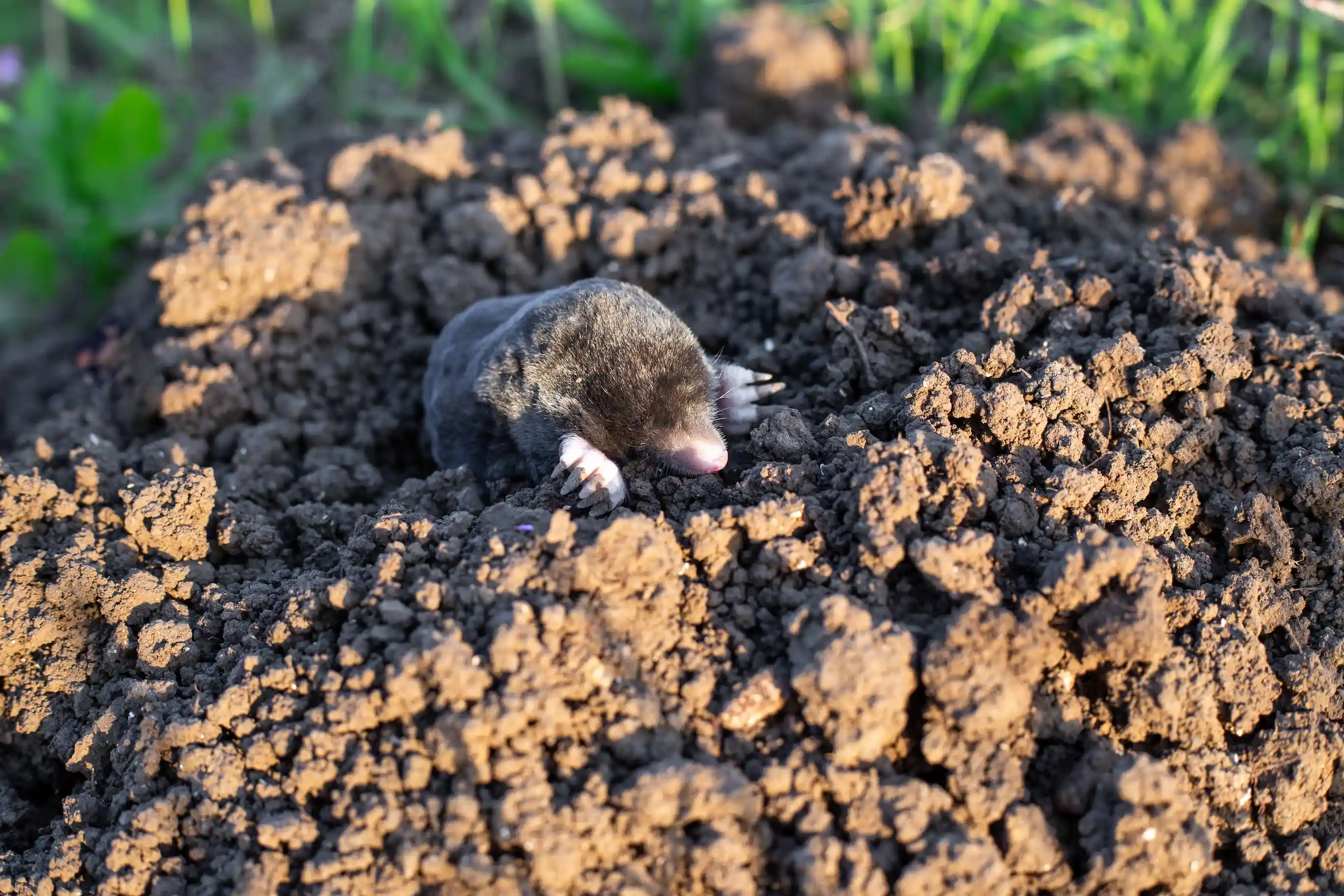
If you're seeing raised ridges, soft spots, or small mounds of soil erupting across your yard, you're likely dealing with mole activity. Moles are burrowing mammals that tunnel through residential lawns searching for grubs, earthworms, and other soil-dwelling insects — and they're one of the most common turf problems for homeowners in the Richmond area.

Raised Tunnels & Ridges
Visible surface tunneling that creates uneven, spongy areas across your lawn — especially noticeable in spring and fall when moles feed closer to the surface.
Mole Hills & Dirt Mounds
Small volcano-shaped mounds of soil pushed up from deeper tunnels. These are most common in summer and winter when moles burrow deeper to avoid temperature extremes.
Soft, Sinking Spots
Areas where the ground gives way underfoot. Mole tunnels weaken the root zone beneath your grass, creating soft spots that damage turf over time.
Dead or Yellowing Patches
While moles don't eat grass directly, their tunneling disrupts root systems and can attract grubs — which do feed on grass roots. The result is brown, dying patches above active tunnel networks.
Moles have a high metabolic rate and can tunnel up to 15 feet per hour when actively feeding. A single mole can cause significant lawn damage in a short period — and because they constantly move and can re-enter properties from neighboring yards, one-time treatments rarely solve the problem. Consistent, season-long control is what actually works.
What the Mole Repellent Program Includes
Our 8-treatment program is strategically timed throughout the year to target peak mole activity windows. Rather than chasing moles after the damage is done, we take a proactive approach — targeting their food sources, treating active zones, and creating conditions that discourage moles from establishing on your property.
Treatment areas covered:
- Active tunnel networks and feeding zones
- Lawn areas showing signs of new mole activity
- Perimeter zones where moles typically enter from neighboring properties

Targeted Food Source Reduction
Moles are attracted to lawns with abundant grubs and soil-dwelling insects. Our treatments target these food sources, making your property less attractive to foraging moles. When the food supply is reduced, moles are more likely to move on.
Repellent Applications in Active Zones
We apply mole-repellent treatments directly to active tunnel systems and feeding areas. These applications irritate moles through contact and ingestion, encouraging them to vacate without harming your lawn or other wildlife.
Strategic Timing Throughout the Year
Mole activity shifts seasonally — closer to the surface in spring and fall, deeper in summer and winter. Our 8 treatments are timed to match these patterns, maintaining consistent pressure when moles are most active and most vulnerable to treatment.
Ongoing Monitoring & Adjustment
Each visit includes an assessment of current mole activity. We identify new tunnel systems, track whether previous treatments are holding, and adjust application areas as needed. This isn't a set-it-and-forget-it program — it adapts to what's actually happening in your yard.
A note on expectations: Moles don't respect property lines — a mole that leaves your yard today can return from a neighboring property next month. That's why this is designed as a year-round program rather than a one-time fix. Most customers see a noticeable decrease in new tunneling within the first few treatments, and consistent pressure throughout the season is what keeps activity controlled and your turf protected.
How the Program Works, Season by Season
Our 8-treatment program is timed to match how moles move through your soil throughout the year. Here's what that looks like in practice.
Reduce the Food Source
Moles follow grubs and soil-dwelling insects. Our treatments target those food sources so your lawn becomes less attractive to foraging moles — the first lever in discouraging them from establishing on your property.
Repellent Applications in Active Zones
We apply mole-repellent treatments directly to active tunnels and feeding areas. The products irritate moles through contact and ingestion, pushing them out without harming your lawn, wildlife, pets, or kids.
Season-Long Monitoring & Adjustment
Every visit includes an activity assessment. We identify new tunnel systems, track whether prior treatments are holding, and adjust application areas — matching the seasonal depth changes moles make throughout the year.
Why Consistent Mole Control Outperforms One-Time Fixes
A single mole can tunnel up to 15 feet per hour when actively feeding. That's enough activity to cause visible lawn damage in a matter of days — raised ridges, soft spots, mounds of displaced soil, and disrupted root zones that leave brown patches above active tunnel networks.
The problem with one-time treatments is that moles don't respect property lines. A mole that leaves your yard today can return from a neighboring property next month. Reproduction happens underground and out of sight. And because they constantly move through an existing network of tunnels, today's clear lawn can turn into next week's problem.
That's why our Mole Repellent Program is built around consistent, year-round pressure instead of a single visit. Eight treatments, timed to match seasonal depth changes and peak activity windows, keep your lawn on the defensive side of the equation — so when a mole does find its way in, it finds conditions that push it right back out.
For homeowners already on the GC Soil Builder program, mole control layers on top of the grub prevention and turf-strengthening treatments you're already getting. The two work together: reduce the food supply, repel active moles, and help your lawn recover from any damage that does occur.

Services That Work Alongside Mole Control


Aeration & Overseeding

Landscape Bed Weed Control
Common Questions About Mole Control
Mole Control Throughout the Richmond Area
Our Mole Repellent Program is available to homeowners across the greater Richmond region. For mole control in Richmond, VA and surrounding counties, we serve the communities below and more.
Service Areas:
Don't see your area?
Call us at (804) 795-5564 to check if we serve your location.

Ready to Get Mole Activity Under Control?
If moles are tearing up your lawn and one-time fixes haven't worked, this is the program designed for long-term results. Questions first? Call us at (804) 795-5564 — we're happy to talk through your situation before you commit to anything.