Why Is My Lawn Patchy? Common Richmond Lawn Problems and Fixes
A patchy lawn is frustrating, especially when you’ve been putting in the work. The good news: in the Richmond area, the culprit is almost always one of a handful of common, manageable problems. The key is to identify before you treat—blanket-spraying a brown patch that’s actually drought stress just wastes money and stresses your grass further.
In fact, Virginia Cooperative Extension notes that very few insect and disease problems significantly impact home lawns here, and there’s no need for routine insecticide or fungicide applications. So before you reach for a chemical, let’s figure out what you’re actually looking at.
Brown Patch: The Most Common Richmond Lawn Disease
If you have tall fescue (and most Richmond lawns do) and you’re seeing irregular brown or thinning areas in the heat of summer, brown patch is the prime suspect. Extension calls it the most common lawn disease in our area, and it’s the number-one disease of tall fescue across the mid-Atlantic.
What causes it: a fungus that thrives in heat and humidity. It gets severe during stretches of warm, wet, overcast weather—especially when nighttime temperatures stay above about 68°F and days climb into the upper 80s. Overwatering and too much nitrogen (or any nitrogen applied in spring or summer) make it noticeably worse.
What it looks like: in home fescue lawns, brown patch usually shows up as diffuse browning and thinning in patches rather than crisp rings. The encouraging part: the fungus typically damages the leaf blades, not the whole plant, so the lawn usually recovers when the weather cools.
How to manage it:
- Mow at 3 inches or higher.
- Water only in the early morning, around sunrise, to shorten the time the grass stays wet.
- Hold off on nitrogen until fall.
- Improve air movement and sunlight by pruning nearby shrubs and trees.
- Choose brown-patch-resistant tall fescue cultivars when you overseed.
Fungicides are expensive and generally aren’t recommended for home lawns—letting the lawn recover naturally as temperatures drop is a perfectly acceptable approach.
Dollar Spot: Small Silver-Dollar Spots
Dollar spot shows up as small, straw-colored circles roughly the size of a silver dollar (2 to 6 inches) that can merge into larger blighted areas. Two clues help you identify it: distinctive hourglass-shaped lesions on individual blades with reddish-brown borders, and a white, cobweb-like growth visible in early-morning dew.
Here’s the useful twist: dollar spot is a low-nitrogen disease. It tends to appear when the lawn is underfed, so maintaining adequate fertility—at the right time of year—actually helps suppress it. Tall fescue is more resistant to dollar spot than bluegrass or ryegrass, which is one more point in fescue’s favor.
White Grubs: Patches That Lift Like Carpet
Grubs are the larvae of beetles—most often Japanese beetles in our area—and they feed on grass roots underground. Virginia Tech identifies white grubs as the most widespread insect pest of cool-season turf in the state.
Signs to look for: irregular brown patches in late summer and fall that don’t green up no matter how much you water. The giveaway is that affected turf pulls back like a loose piece of carpet, because the roots that anchored it have been eaten. You may also see skunks, raccoons, birds, or moles digging up the lawn to feed on the grubs—and sometimes that digging causes more damage than the grubs themselves.
Before you treat, count. It generally takes about 6 to 7 grubs per square foot to cause real damage. Finding two or three is normal and not a reason to spray. To scout, cut three sides of a one-square-foot flap of sod about three inches deep in several spots, fold it back, and count. If you’re averaging more than six, treatment is justified. Preventive products go down in June when adult beetles are flying; curative treatments work best in mid-July when grubs are small.
If grubs turn out to be your problem, our lawn treatment program includes grub and armyworm control and handles the timing and product selection.
Drought Stress vs. Disease
Not every brown lawn is sick. Tall fescue can go summer-dormant—turning brown to conserve energy—and green back up in fall. This is survival, not death. Early signs that the lawn needs water include a bluish-gray tint and footprints that stay visible after you walk across it.
You have two honest options in a dry spell: water consistently, or let the lawn go dormant and water just enough (about every three weeks) to keep the crowns alive. What you don’t want to do is bounce back and forth, which stresses the grass more than committing to either path.
Compacted Clay Soil: The Hidden Cause
Central Virginia’s red clay compacts easily, and compacted soil chokes roots of the oxygen, water, and nutrients they need—producing thin, struggling turf that no amount of fertilizer seems to fix. This is one of the most overlooked reasons lawns stay patchy. The remedy isn’t more product; it’s core aeration plus organic matter, which we cover in our guide to aeration and clay soil.
Pet Urine Spots
Those dead spots with a ring of extra-lush green around them are classic dog-urine damage. Contrary to popular belief, it’s not about urine pH—it’s the high concentration of nitrogen and salts, which acts like a fertilizer overdose. The center burns out while the diluted edges grow greener.
What actually helps: water. Flushing the spot deeply and promptly with plain water is the only reliable way to reduce the damage. Skip the popular “fixes”—baking soda and gypsum are salts that can make things worse, dish soap can burn the grass, and diet supplements meant to change urine pH aren’t scientifically supported and may harm your dog. To repair existing spots, reseed with turf-type tall fescue, the most urine-tolerant cool-season grass.
Improper Watering and Mowing
Sometimes the cause is simpler than a pest or disease. Mowing too short, using a dull blade, mowing wet grass, and watering lightly every day all thin the turf and open the door to weeds and disease.
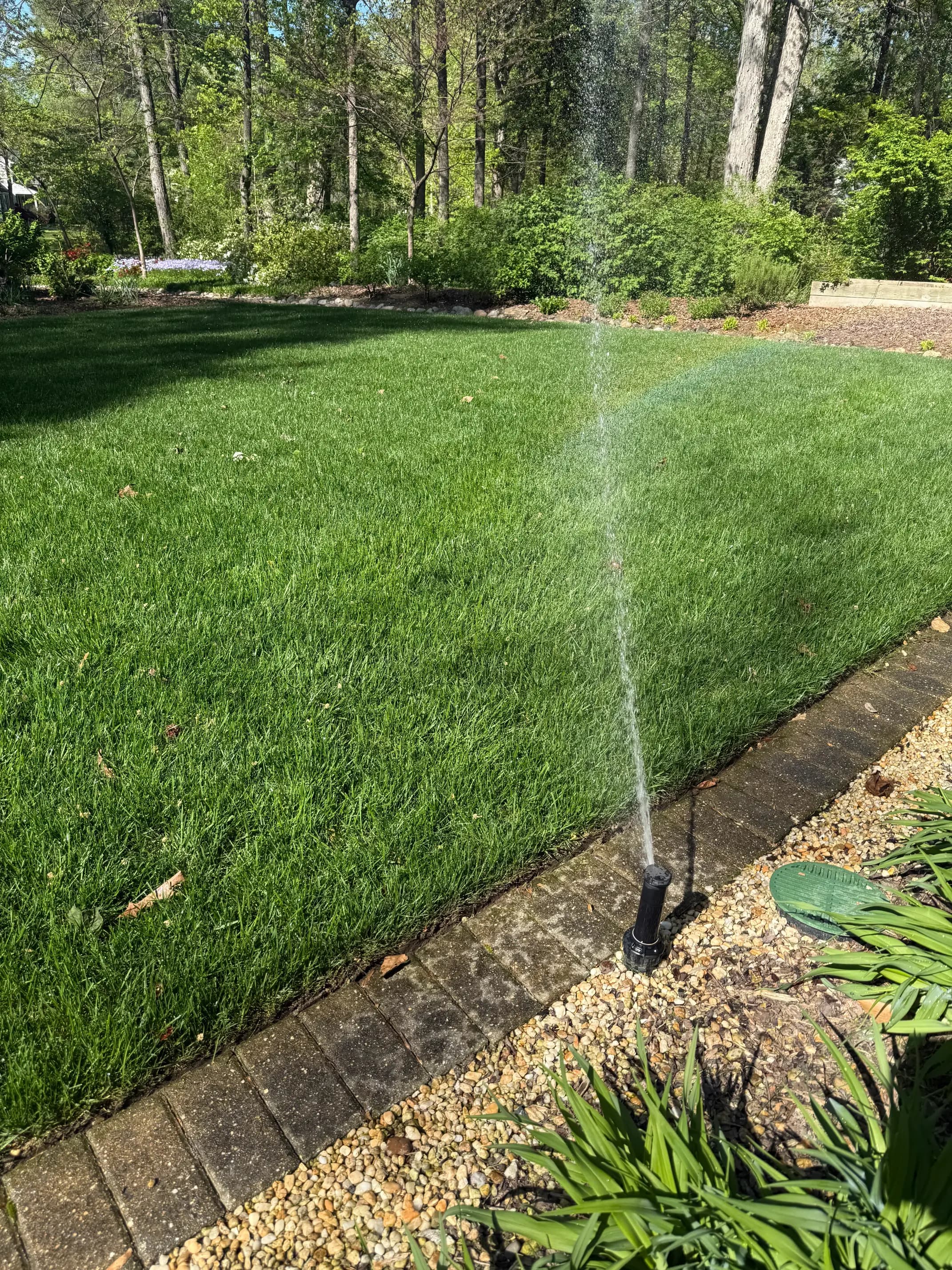
The watering rule of thumb for Richmond lawns: about one inch of water per week (including rain), delivered deeply and infrequently—once or twice a week, not a little every day. Deep watering drives roots downward; shallow daily watering keeps them at the surface where they’re vulnerable. Water in the early morning to keep the grass from staying wet overnight. A handy check is the screwdriver test: if a six-inch screwdriver won’t slide two inches into the soil, it’s time to water.
When to Call in Help
Many patchy-lawn problems are fixable with better timing and habits. But if you’ve corrected your watering and mowing and the lawn still struggles, it’s often a soil or disease issue worth a professional eye. Our lawn treatment program is built around diagnosing the actual cause and managing it season by season—rather than guessing.
This article is for general guidance. Sources: Virginia Cooperative Extension / Virginia Tech and the Henrico County “SMART Lawns” program; Colorado State University Extension; University of Maryland Extension.
Ready for a Healthier, Greener Lawn?
Get a free quote and we'll build a season-by-season plan tailored to your lawn, your soil, and the Richmond climate.
.webp&w=3840&q=75&dpl=dpl_578BGvK1rgyLyTeMSvA92566FwL3)